
Editorial Verdict
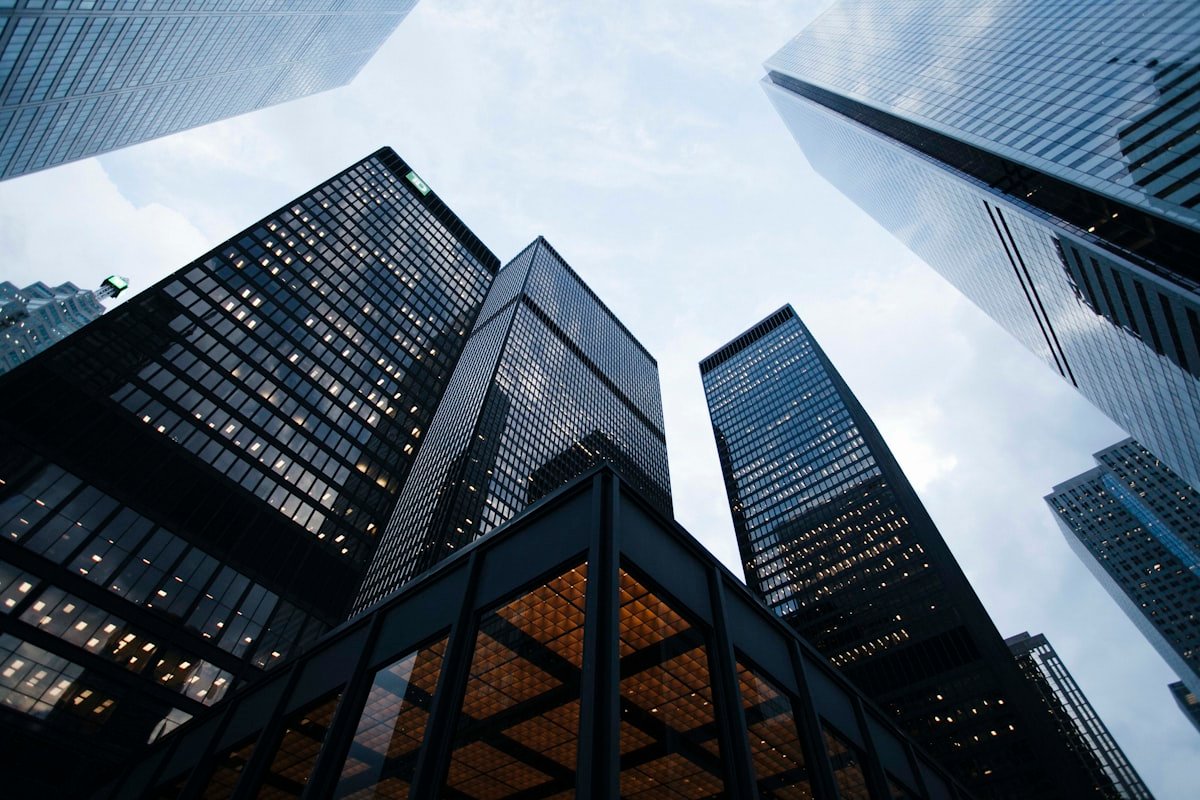
The dialogue between Brutalism’s monolithic concrete forms and the ephemeral transparency of glass represents one of architecture’s most compelling tensions. When executed with mastery, this juxtaposition creates buildings that are simultaneously monumental and ethereal — structures that challenge our assumptions about weight, light, and enclosure.
Rating: ⭐⭐⭐⭐⭐ | Best For: Architecture enthusiasts and design professionals interested in material expressionism
The Weight of Transparency
Brutalism — from the French “béton brut” (raw concrete) — has long been associated with the heavy, the muscular, the unapologetically massive. The Barbican Centre in London, Habitat 67 in Montreal, the National Theatre on the South Bank — these are buildings that announce their material presence with an almost aggressive physicality. And yet, within this tradition of weight, a fascinating counter-movement has emerged: the integration of vast glazed surfaces that introduce transparency, lightness, and a dramatic interplay of solids and voids.
This is not a contradiction but a dialogue. When Tadao Ando inserts an enormous glass wall into a concrete volume, the glass does not soften the concrete — it intensifies it. The transparency makes the surrounding mass feel more deliberate, more powerful, more present. Light becomes a building material as tangible as the concrete itself, moving through the space in ways that change the architecture’s character from dawn to dusk.
Tadao Ando: The Poetry of Concrete and Light
No architect has explored the relationship between concrete and natural light more profoundly than Tadao Ando. His Church of the Light in Osaka (1989) reduces architecture to its most essential elements: four concrete walls, a cruciform slit that admits a blade of sunlight, and nothing else. The glass is invisible — it is the light itself that becomes the material.
Ando’s larger institutional works — the Modern Art Museum of Fort Worth, the 21_21 Design Sight in Tokyo — demonstrate how glass curtain walls can be deployed within Brutalist volumes to create spaces that are both introspective and connected to the landscape. At Fort Worth, floor-to-ceiling glazing reflects the surrounding water feature, dissolving the boundary between interior gallery and exterior nature.
Louis Kahn: The Geometry of Light
Louis Kahn’s Salk Institute for Biological Studies in La Jolla, California (1965) is perhaps the most celebrated example of glass articulating a Brutalist vision. The facing concrete laboratory blocks — with their monumental, travertine-detailed facades — frame a central courtyard of mathematical precision. The glass walls of the study towers, set back from the concrete frame, create a layered transparency that reveals the building’s internal structure without weakening its monumental exterior presence.
Kahn called this approach “served and servant spaces” — a philosophy where the primary glass-enclosed rooms (served) are supported by the concrete infrastructure (servant) in a visible hierarchy that gives the building an intellectual legibility rare in contemporary architecture.
Contemporary Evolution
Today’s architects are extending this tradition with new technologies. Structural glass — capable of bearing load without metal mullions — enables the creation of fully transparent enclosures within massive concrete forms. Peter Zumthor’s Therme Vals demonstrates this beautifully: enormous windows cut into the quartzite-and-concrete walls frame the Alpine landscape like living paintings, their frameless construction creating an almost surreal sense of weightlessness within the bath’s heavy volumes.
Herzog & de Meuron’s work frequently juxtaposes massive concrete construction with unexpected moments of transparency. The Vitra Schaudepot — a furniture museum near Basel — is an apparently solid brick building that reveals, through strategically placed windows, curated views of the collection within, transforming the act of looking from the outside into a curatorial experience.
The Technical Challenge
Integrating glass into Brutalist structures presents unique engineering challenges. Concrete is a compressive material — it excels at bearing weight downward. Glass, by contrast, is fragile under point loads and susceptible to thermal stress. The junction between these materials — the moment where transparency meets mass — requires sophisticated detailing that accounts for differential thermal expansion, water management, and structural movement.
Modern solutions include silicone-bonded structural glazing systems that allow glass to span large openings without visible frames, and thermally broken concrete-to-glass connections that prevent the cold bridging that would otherwise cause condensation and energy loss at these critical junctions.
Frequently Asked Questions
Q: Is Brutalism making a comeback?
A: Brutalism is experiencing a significant critical and popular reappraisal, driven by social media appreciation and architectural scholarship. Many significant Brutalist buildings are now listed heritage structures, and contemporary architects increasingly reference Brutalist principles in new work.
Q: What is the best contemporary example of concrete-and-glass architecture?
A: Tadao Ando’s Church of the Light and Louis Kahn’s Salk Institute remain the canonical examples, but Peter Zumthor’s Therme Vals and Grafton Architects’ UTEC Lima represent the finest contemporary expressions.
Q: Can Brutalist buildings be energy efficient?
A: Yes — concrete’s thermal mass can actually improve energy performance by absorbing heat during the day and releasing it at night. When combined with high-performance glazing, Brutalist buildings can meet or exceed modern energy standards.
Disclaimer: This article is an independent editorial review.