
Editorial Verdict
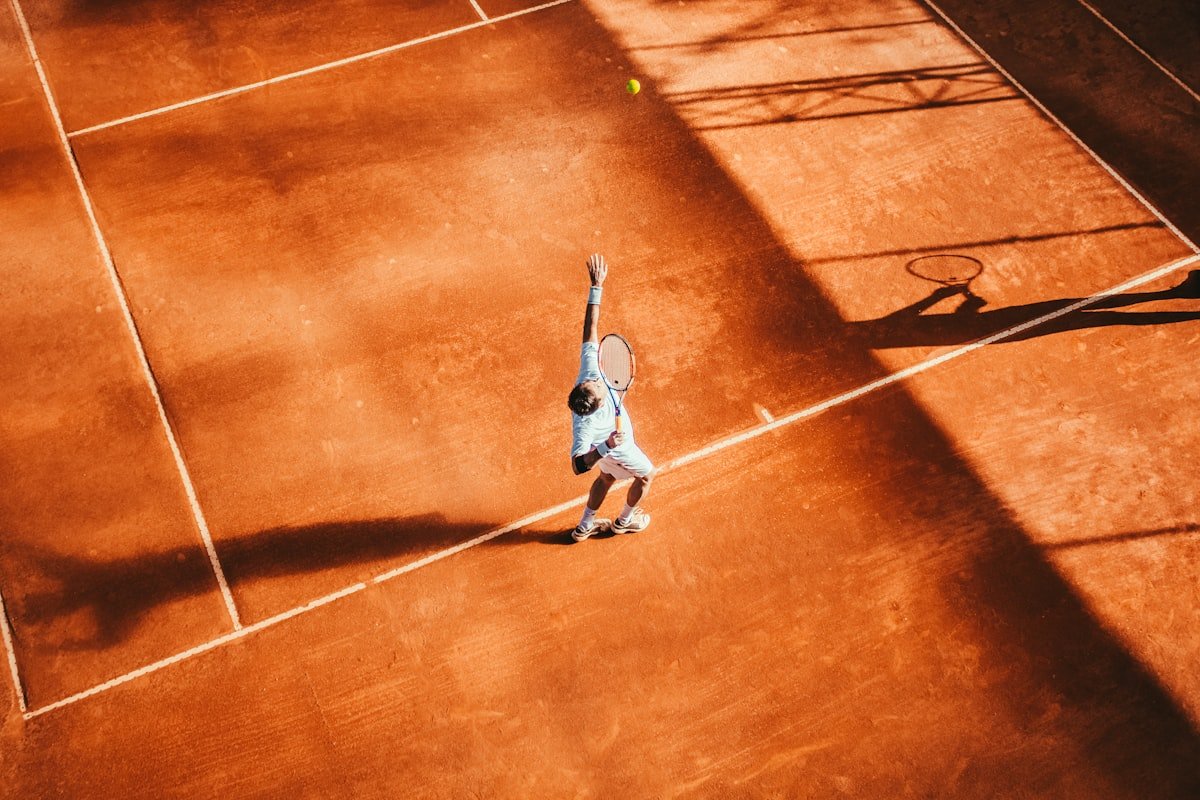
Tennis is the sport where individual brilliance meets tactical chess, played on surfaces that fundamentally alter the game’s character. From the grasscourts of Wimbledon to the clay of Roland Garros, tennis remains the ultimate arena for precision, power, and mental fortitude — and the equipment technology driving today’s game has never been more sophisticated.
Rating: ⭐⭐⭐⭐⭐ | Best For: Sports enthusiasts and aspiring players seeking insight into elite-level equipment and performance
The Geometry of the Modern Game
Modern tennis is a sport defined by physics. The average serve in men’s professional tennis now exceeds 120 mph, with the fastest recorded serve reaching 163.7 mph. Groundstrokes that would have been considered aggressive a generation ago are now baseline standards. Topspin rates have increased by over 50% since the wooden racket era, fundamentally changing the geometry of the game.
This evolution has been driven as much by technology as by athleticism. Today’s rackets, strings, and shoes are engineered with the same computational precision as aerospace components, creating a synergy between human capability and material science that pushes the boundaries of what the sport can achieve.
The Racket Revolution
Wilson Pro Staff 97 v14 — Roger Federer’s weapon of choice for two decades, the Pro Staff represents the purist’s ideal: a player’s racket that rewards precision and feel above raw power. Its 97-square-inch head and 16×19 string pattern offer a controlled response that demands — and rewards — technical excellence. At 315 grams strung, it is not for beginners, but for advanced players there is no substitute for its buttery, connected feel.
Babolat Pure Aero — The spiritual successor to the racket that helped Rafael Nadal reshape baseline tennis. The Pure Aero’s aerodynamic frame and open string pattern generate extreme topspin, enabling the heavy, looping groundstrokes that define modern clay-court play. Its latest iteration adds FSI Spin technology that further increases string snap-back for additional rotation.
Head Speed Pro — Novak Djokovic’s frame, refined over 15 years of collaboration, exemplifies the concept of controlled aggression. The Speed Pro’s Auxetic construction adapts its flex profile based on impact intensity — softer for touch shots, stiffer for power strokes — creating a dynamic response that mirrors Djokovic’s all-court game.
String Technology: The Invisible Variable
Strings account for approximately 50% of a racket’s playability, yet they receive a fraction of the attention given to the frame. Modern polyester strings — Luxilon ALU Power, Babolat RPM Blast, Solinco Hyper-G — have enabled the topspin revolution by providing a firm, low-powered response that allows aggressive players to swing harder without losing control.
The counterpoint is natural gut — still considered the gold standard for comfort, power, and feel. Made from bovine intestinal serosa through a process that takes over a year, natural gut strings (notably Babolat VS Touch) offer an elasticity and response that no synthetic material has successfully replicated. Many professional players use a hybrid setup: polyester in the mains for control, natural gut in the crosses for comfort and power.
Footwear: The Foundation of Movement
Tennis shoes are among the most technically demanding footwear in sports. Unlike running shoes that move in a single plane, tennis shoes must support lateral cuts, forward sprints, backward retrievals, and rotational pivots — often within the same point.
The Nike Air Zoom Vapor Pro 2 represents the current benchmark in tour-level tennis footwear. Its full-length Zoom Air unit provides responsive cushioning, while the modified herringbone outsole delivers traction on hard courts without the excessive grip that can cause ankle injuries during slides.
Frequently Asked Questions
Q: What racket should a club player use?
A: Most club players benefit from a racket with a 100-square-inch head, moderate weight (280-300g), and a balance between power and control. The Wilson Clash 100 and Yonex EZONE 100 are excellent starting points.
Q: How often should strings be replaced?
A: A general rule: restring as many times per year as you play per week. If you play three times a week, restring at least every four months. Players using polyester should restring more frequently as the strings lose elasticity.
Q: What surface is best for learning tennis?
A: Hard courts offer the most consistent bounce and are the most common surface worldwide. Clay courts are easier on the body but develop different movement patterns. Start on hard courts for the broadest skill transferability.
Disclaimer: This article is an independent editorial review.